Speculative Redesign Case Study: HealthEquity + EZ Receipts | B2C | Healthcare
HealthEquity + EZ Receipts
Redesigning a legacy website, simplifying healthcare reimbursements
Context
EZ Receipts (formerly WageWorks and now part of HealthEquity) is a platform employees use to manage their Health Care FSAs, transit benefits, and HRA claim reimbursements.
The ecosystem behind it is… far from simple. Many users move through a tangled pathway:
Kaiser “Health Payment” portal → SSO redirect → HealthEquity EZ Receipts login each with its own visual language, navigation model, terminology, and mental model.
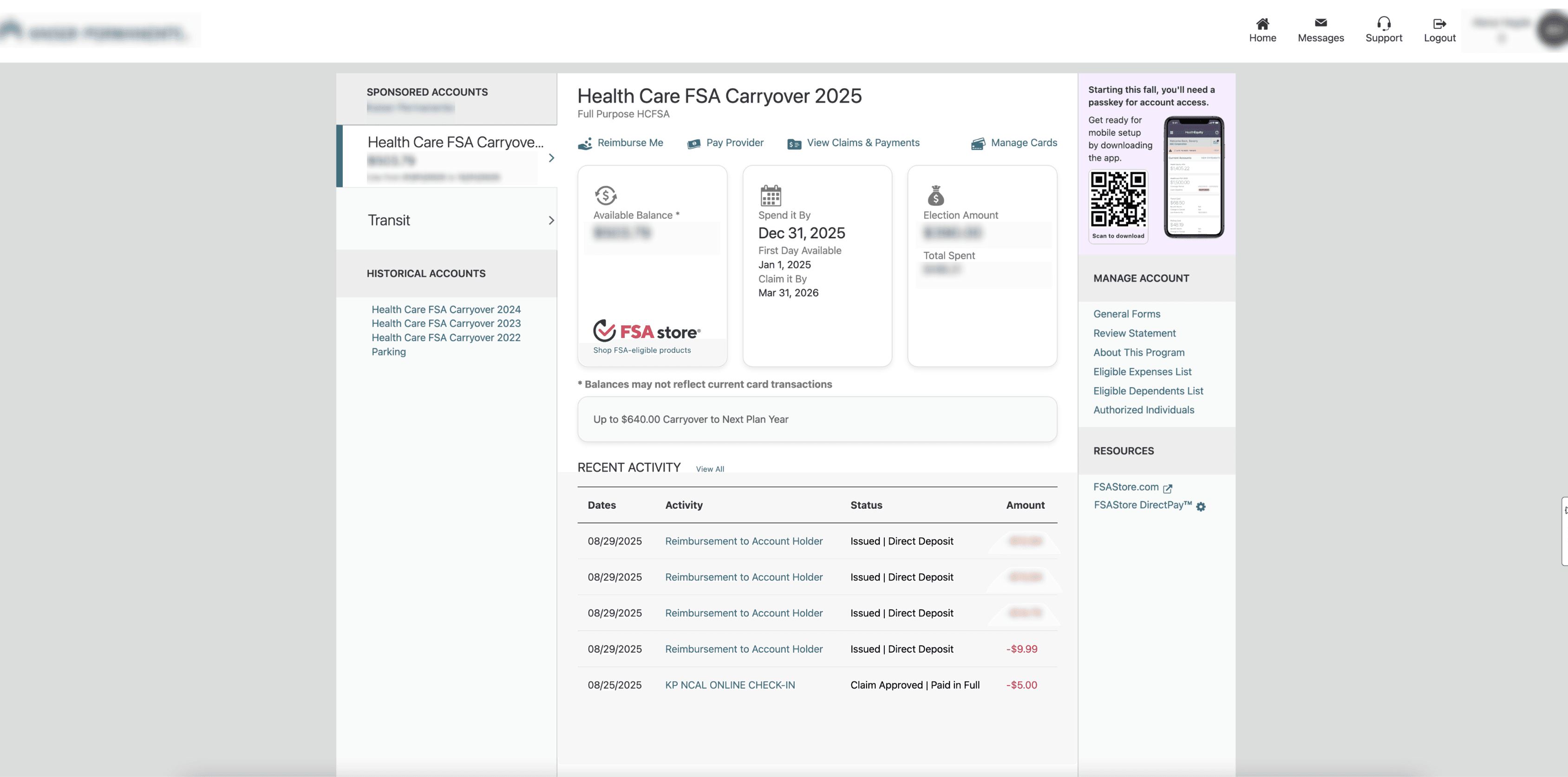
Despite being essential, the interface feels dated, confusing, and overly manual — a reliable recipe for user frustration.
I set out to reimagine the experience for desktop, focusing on the homepage, global navigation, and the manual claim-entry flow.

Problem
Submitting a healthcare claim should be simple. Instead, EZ Receipts made it:
Bulky and confusing: Redundant steps and fragmented workflows increased cognitive load.
Manual and error-prone: Users had to key in provider names, dates, and details that could easily be extracted from uploaded receipts.
Disorganized navigation: The claim center and global navigation buried core actions behind jargon-heavy menus.
Outdated look and feel: The legacy UI lacked trustworthiness and didn’t align with modern user expectations.
In short: a process meant to save users time was costing them energy.
Solution
Modernize the look and feel to build trust and align with contemporary design standards.
United UI systems of both portals (Kaiser and HealthEquity) to reduce users confusion and cognitive load.
Streamline the claim submission flow by merging redundant steps and guiding users clearly.
Reduce clicks and manual input by auto-filling data from uploaded receipts.
Reorganize navigation so users could quickly access their most common tasks.
The Redesign
1. Homepage (Kaiser's FSA portal)
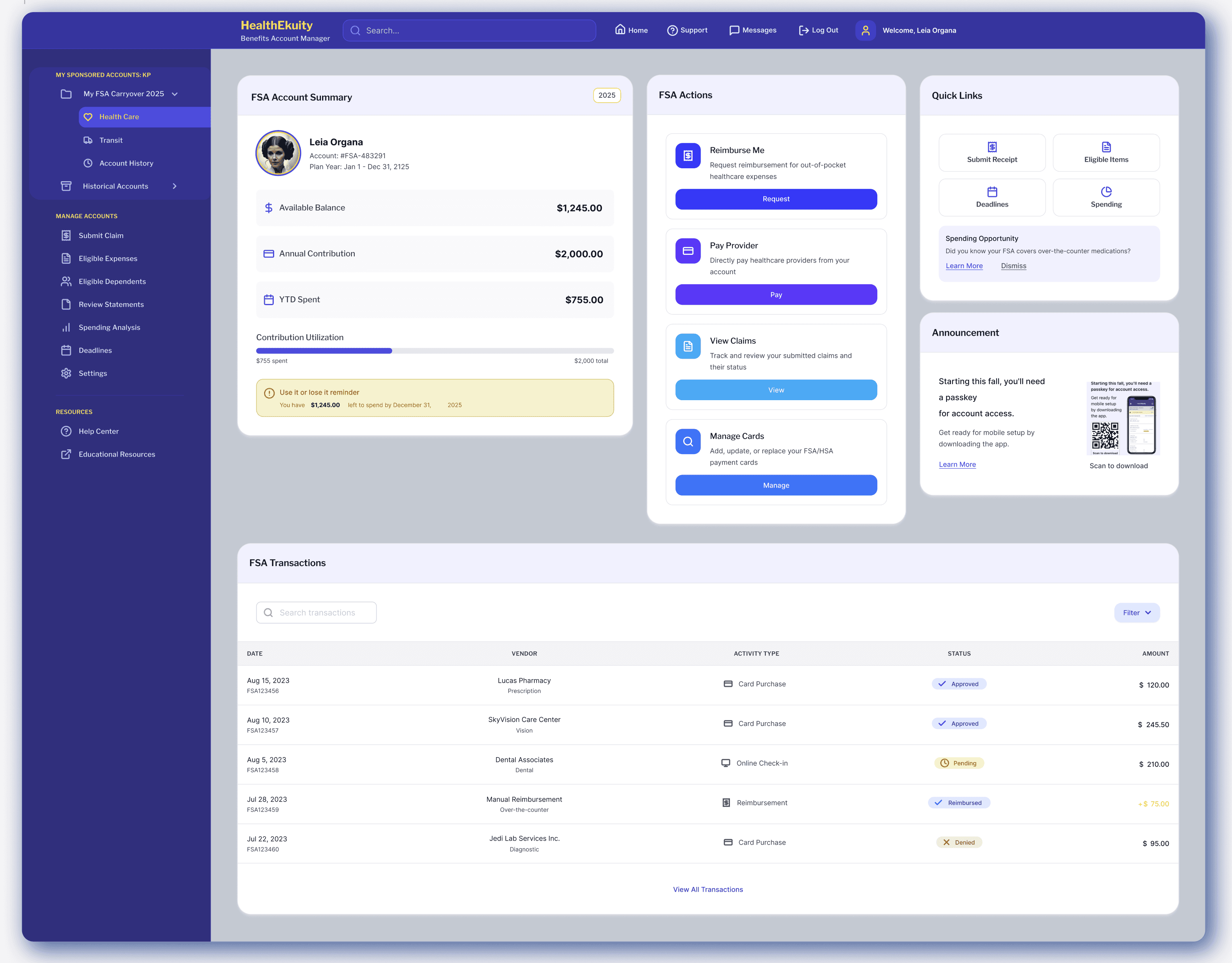
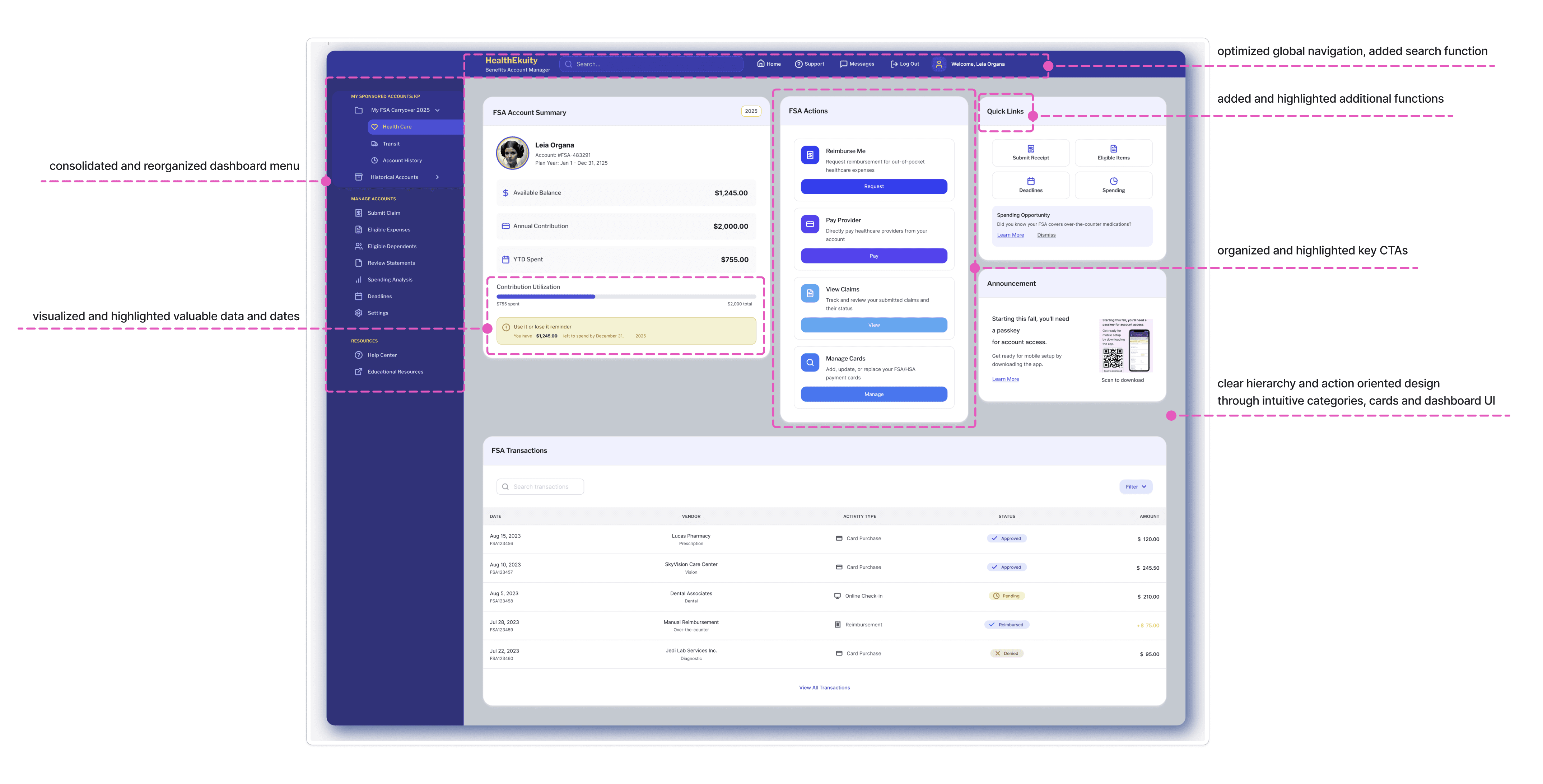
The homepage was redesigned with clear hierarchy and action-oriented design:
A clean, modern dashboard that highlights intuitive categories, such as account holder profile, key balances, deadlines, and quick actions.
Clear calls-to-actions for “Reimburse Me,” “Manage Cards", "Pay Provider", "Check Balance,” “View Claims”, and others.
Streamlined the menu into a left-hand column with reorganized categories and highlighted selections for better orientation.
2. Global Navigation + Claim Center (Kaiser's FSA portal)
An updated the global navigation with search function.
A redesigned claim center with status at-a-glance rather than buried details.
Before
After
After
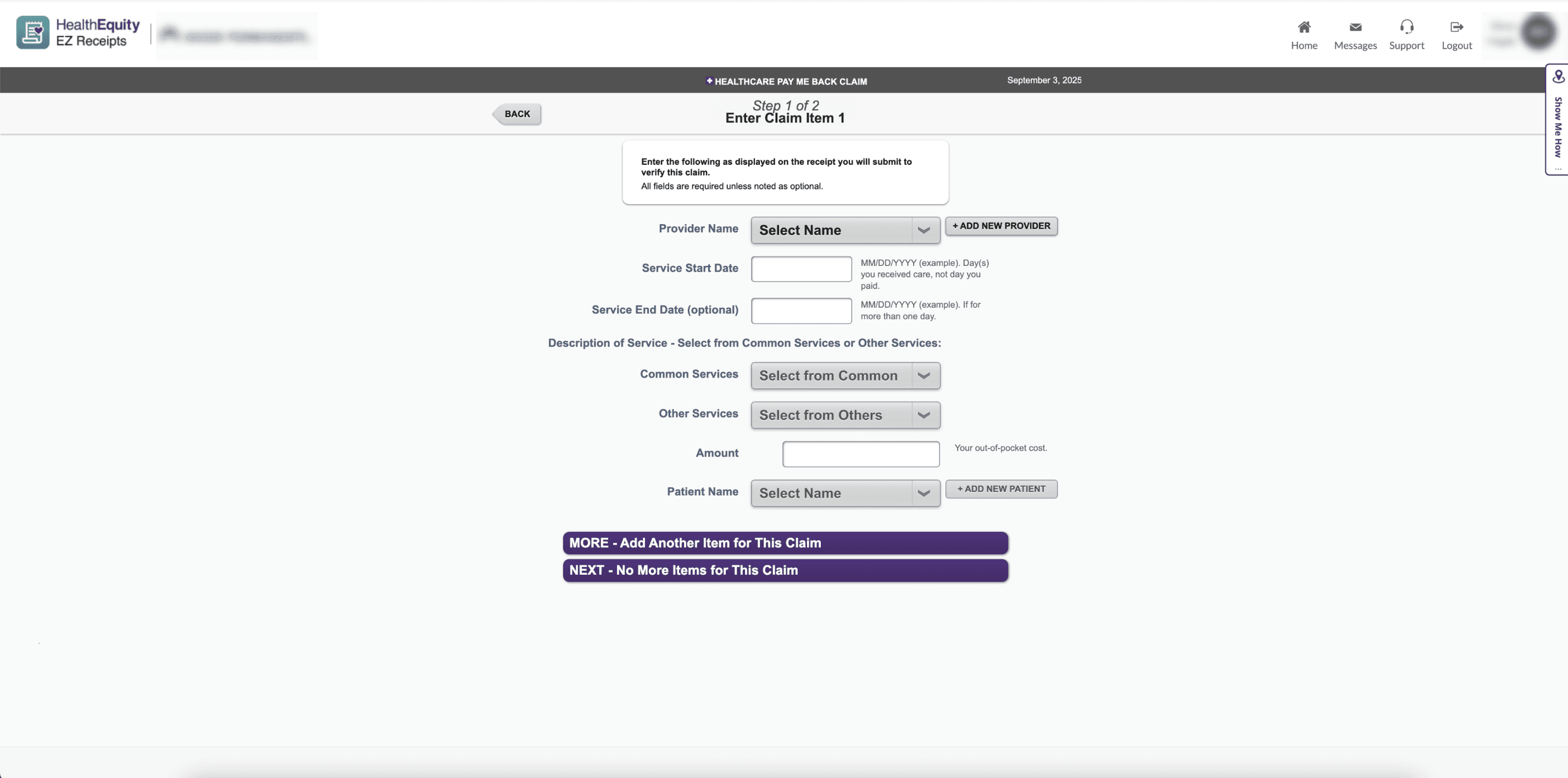
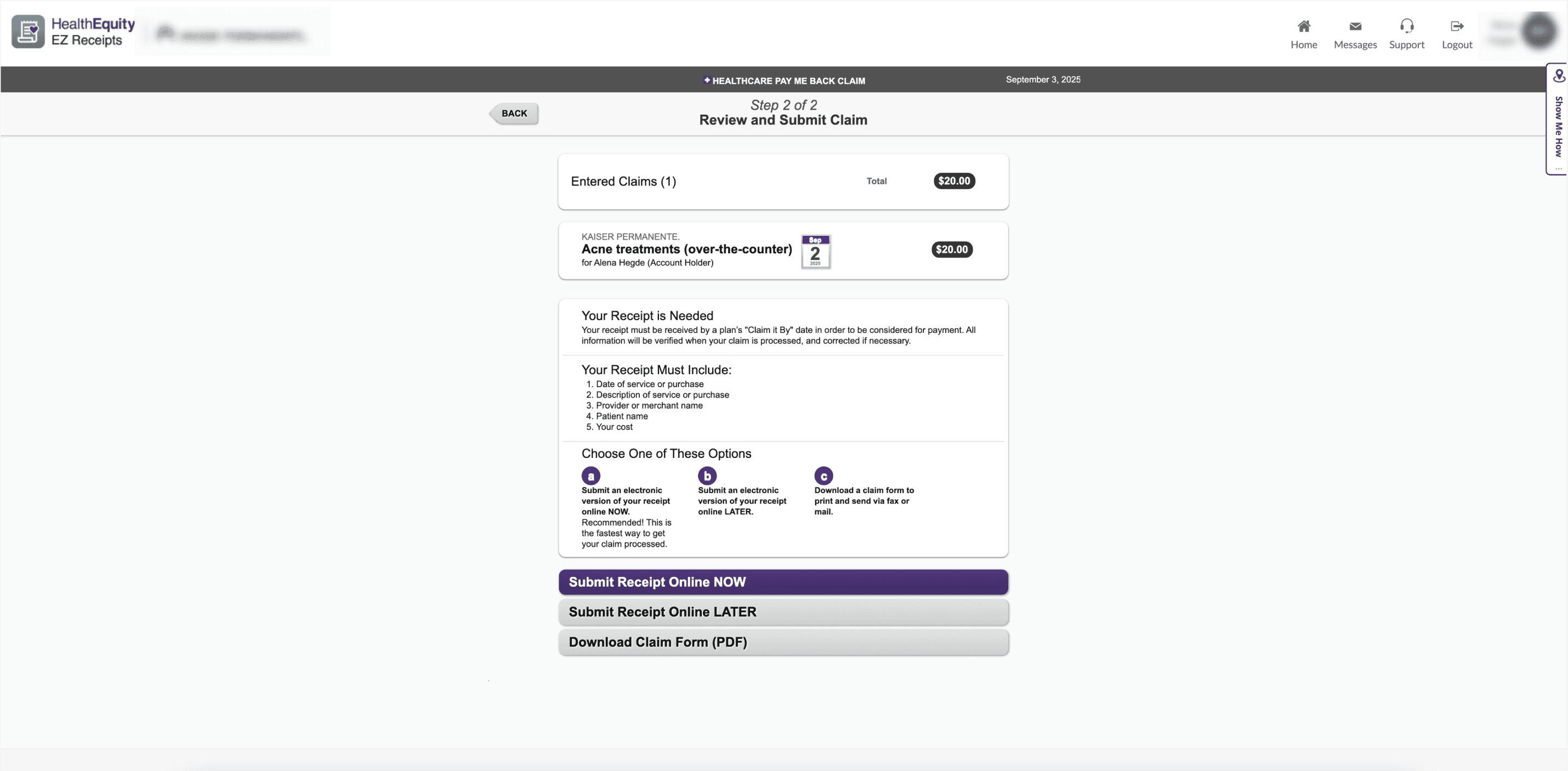
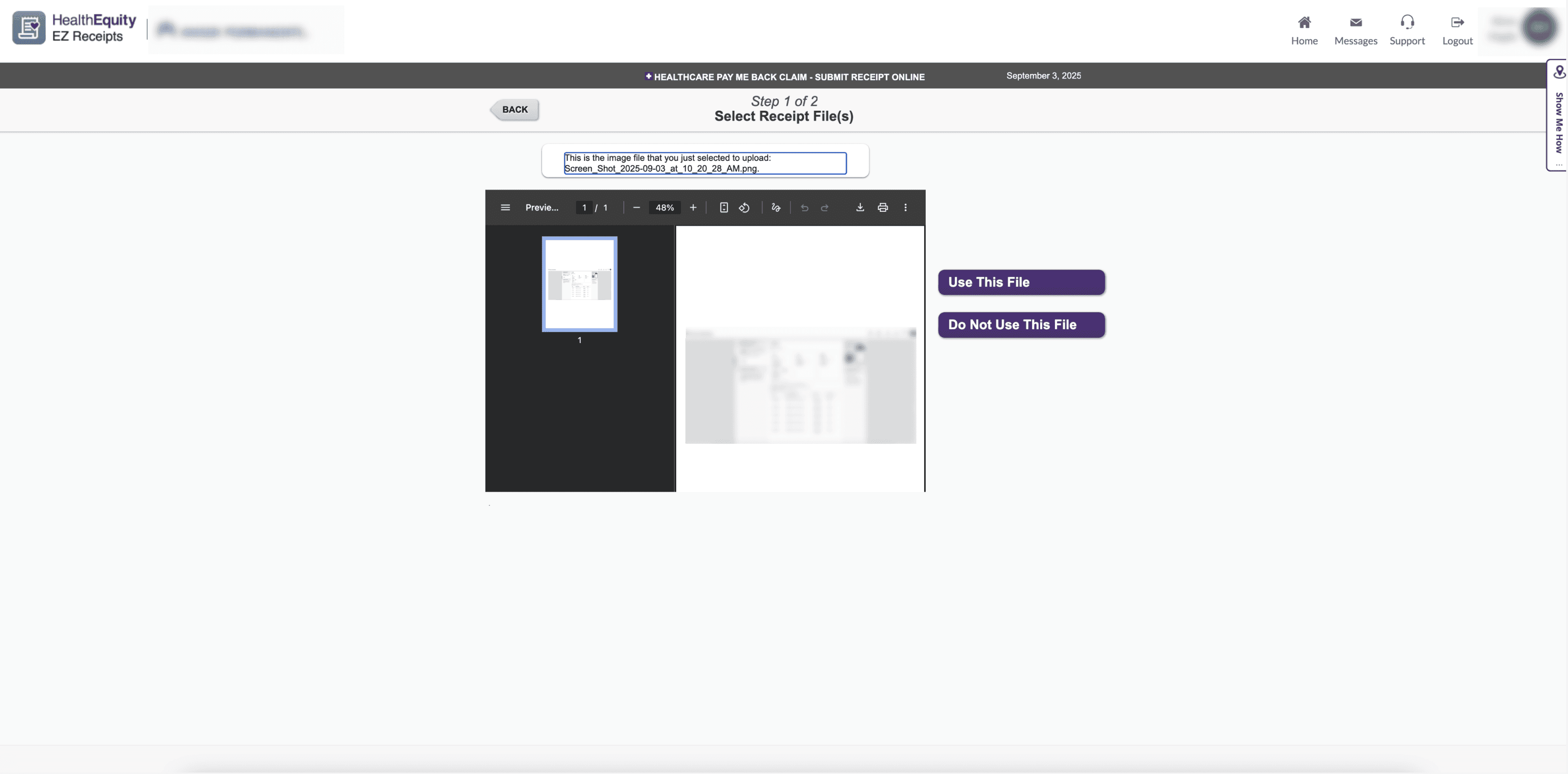
3. Manual Claim Entry Flow (HealthEquity EZ Receipts)
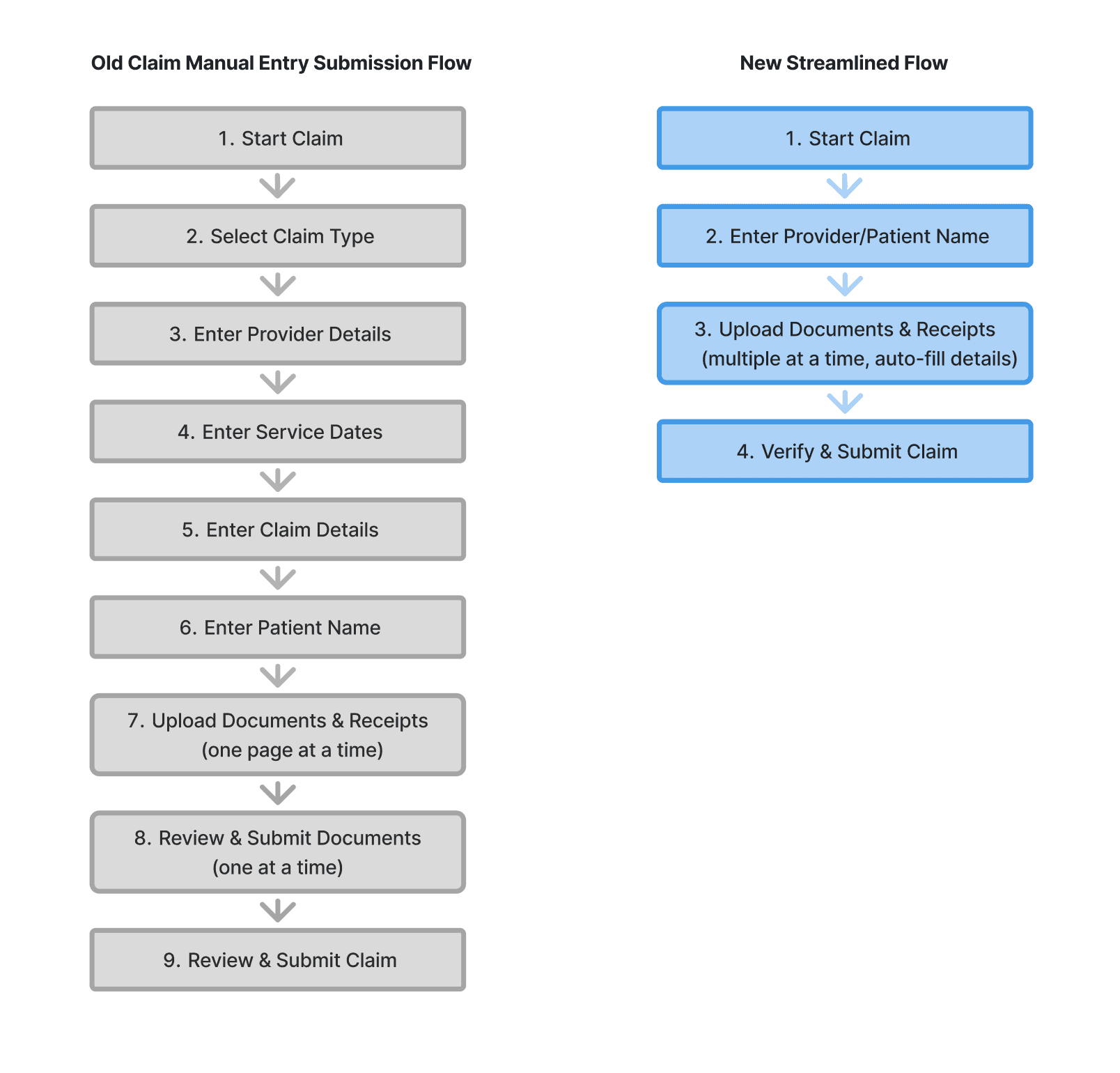
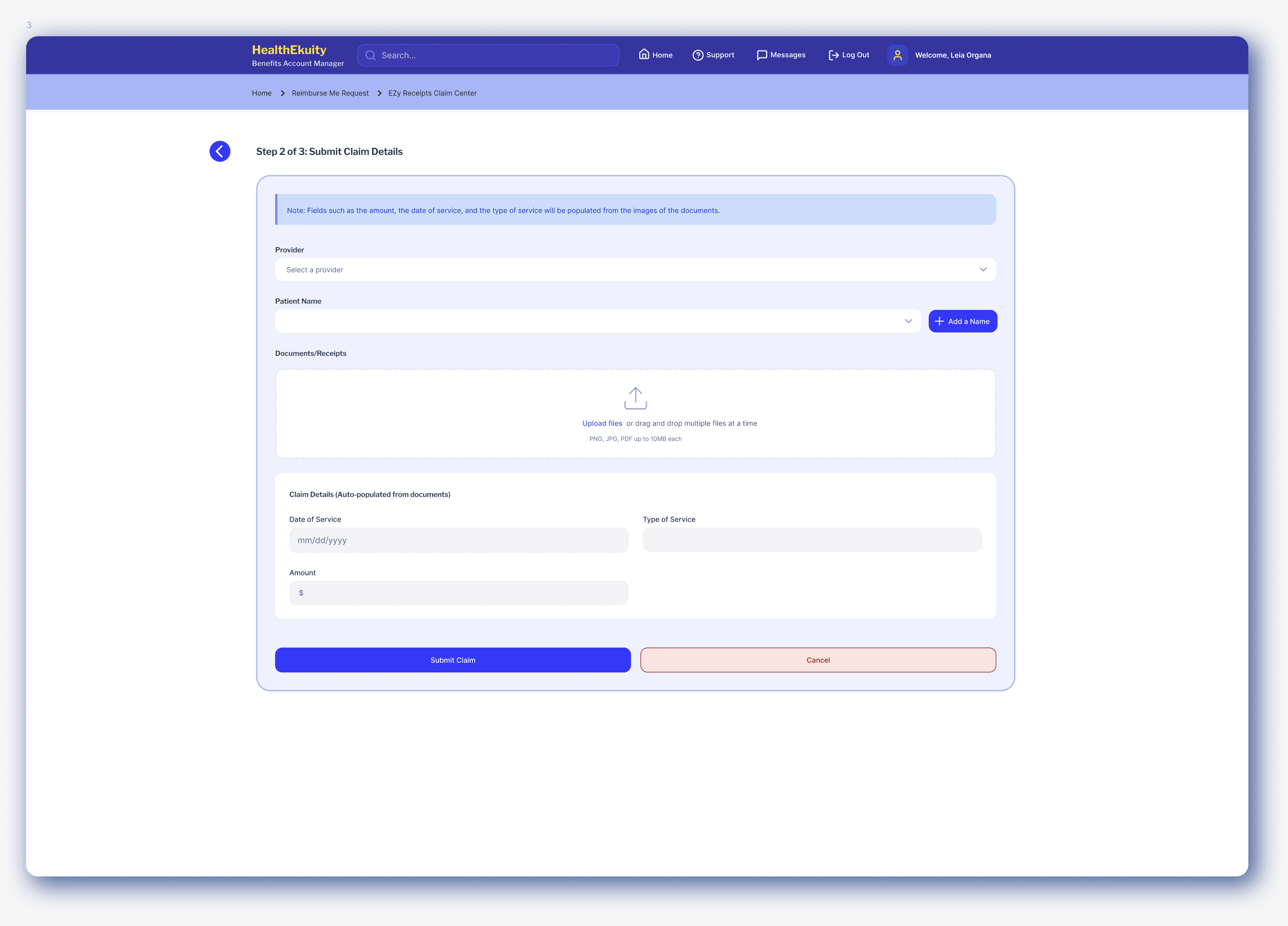
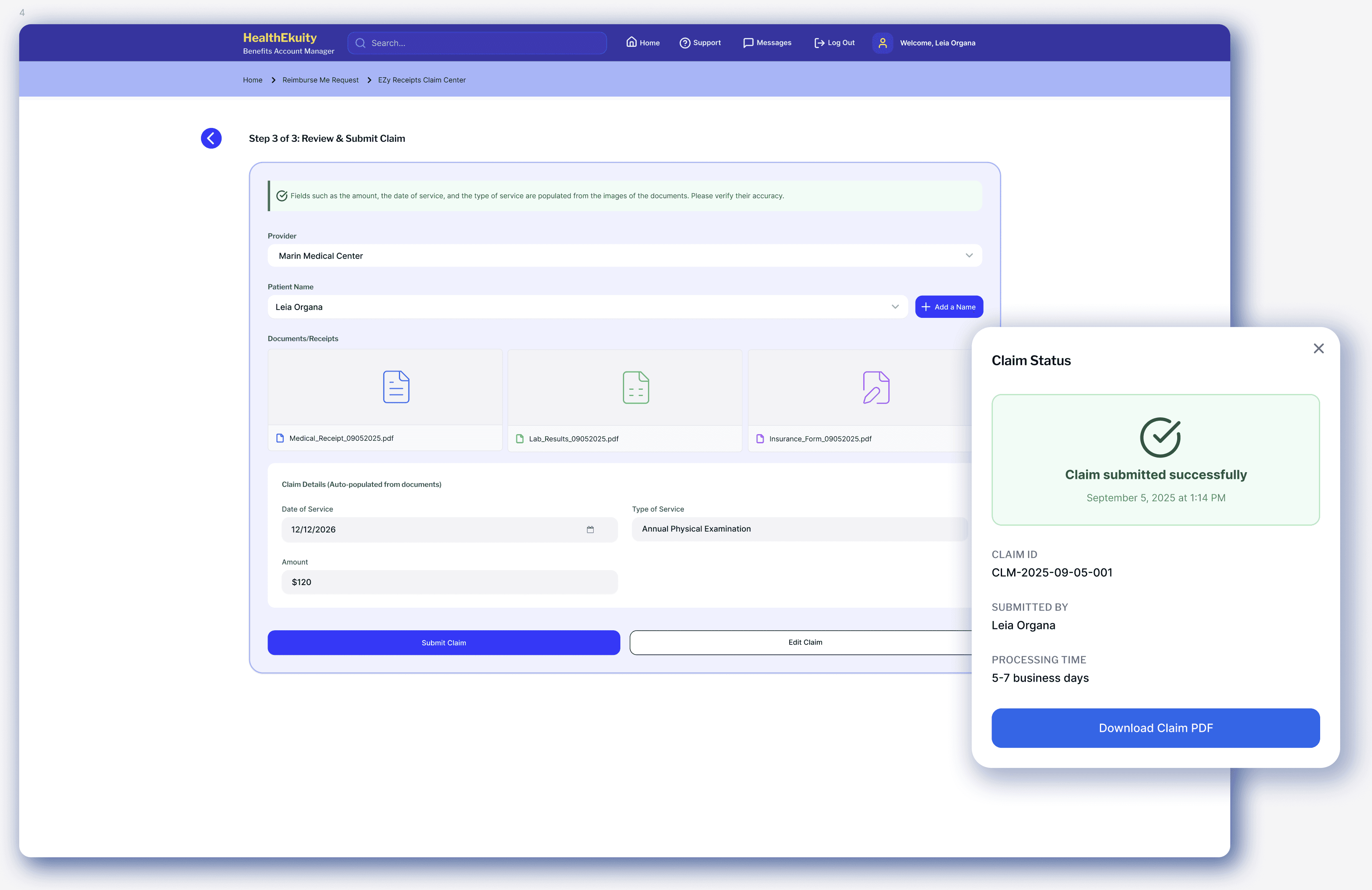
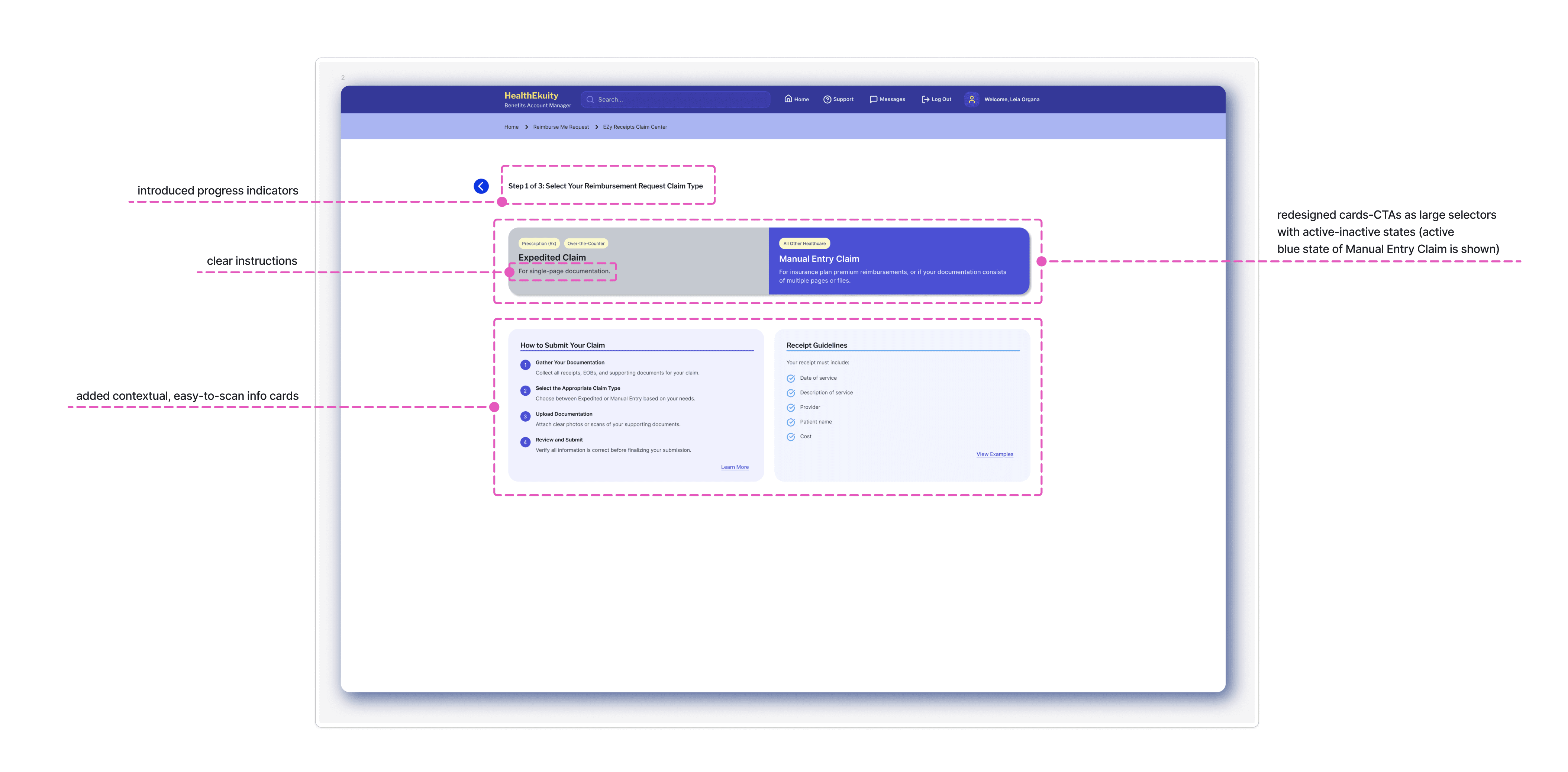
The old flow forced users through multiple bulky steps. I redesigned it into a streamlined, guided process, and reduced the number of steps from 9 to 4:
Auto-fill from uploaded receipts: Users can upload several photos of their receipts/documents, and the system extracts provider, date, and amount automatically.
Simplified forms: Clearer field groupings, inline guidance, and less jargon.
Merged steps: Claim details and documentation uploads are handled in one unified form instead of multiple pages.
Reduced clicks: Fewer steps, fewer screens, less confusion.
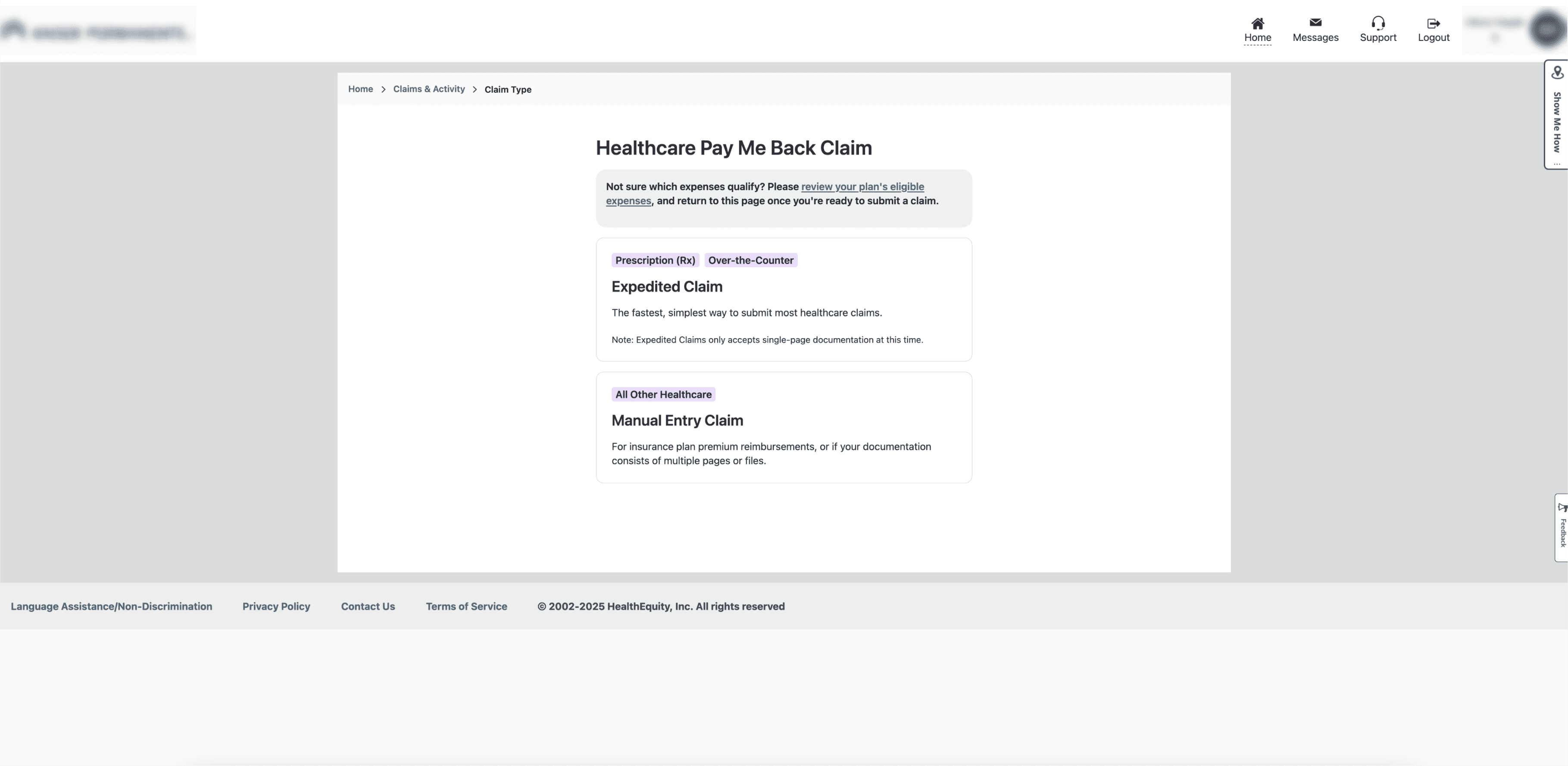
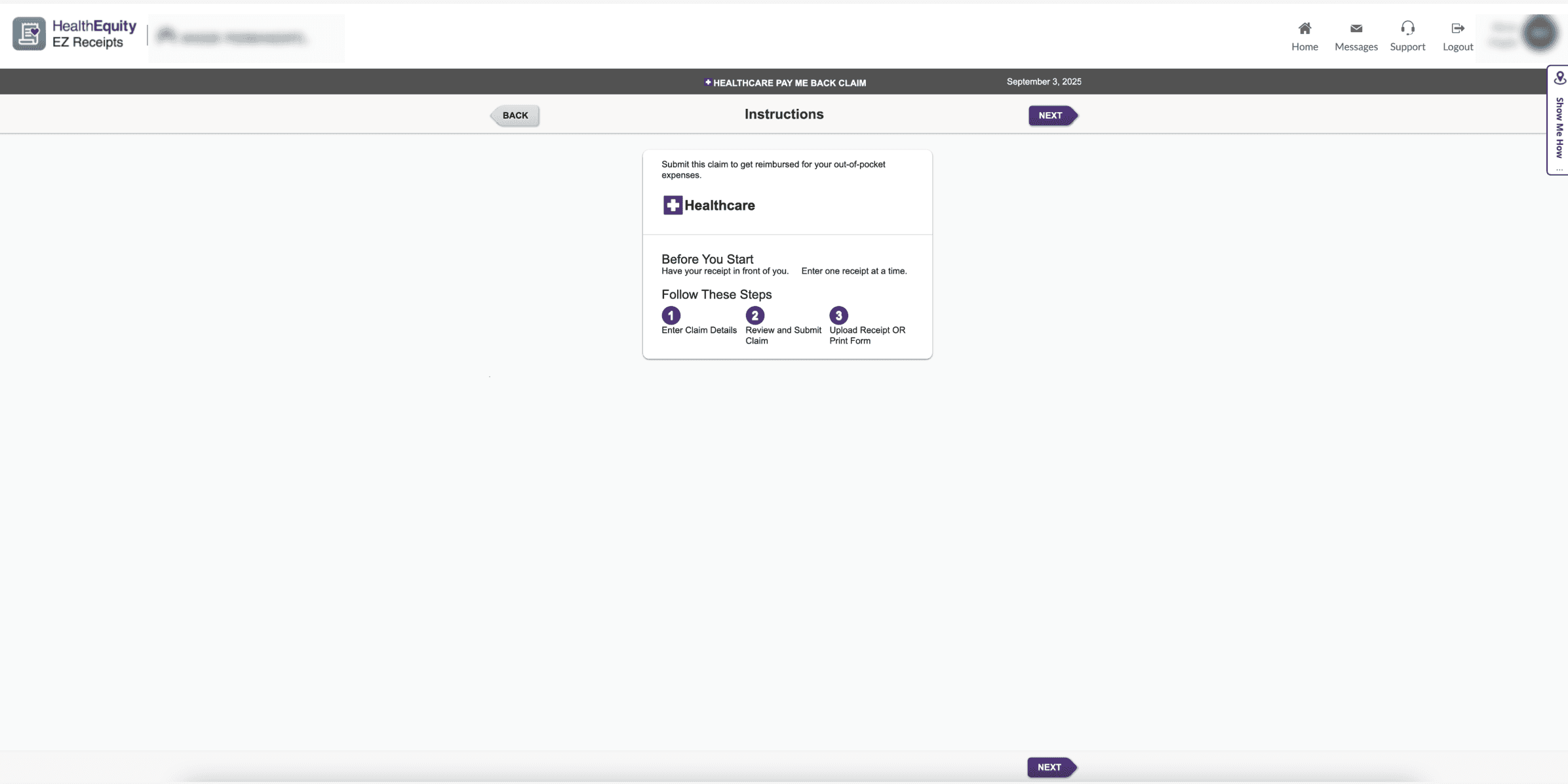
Before
After
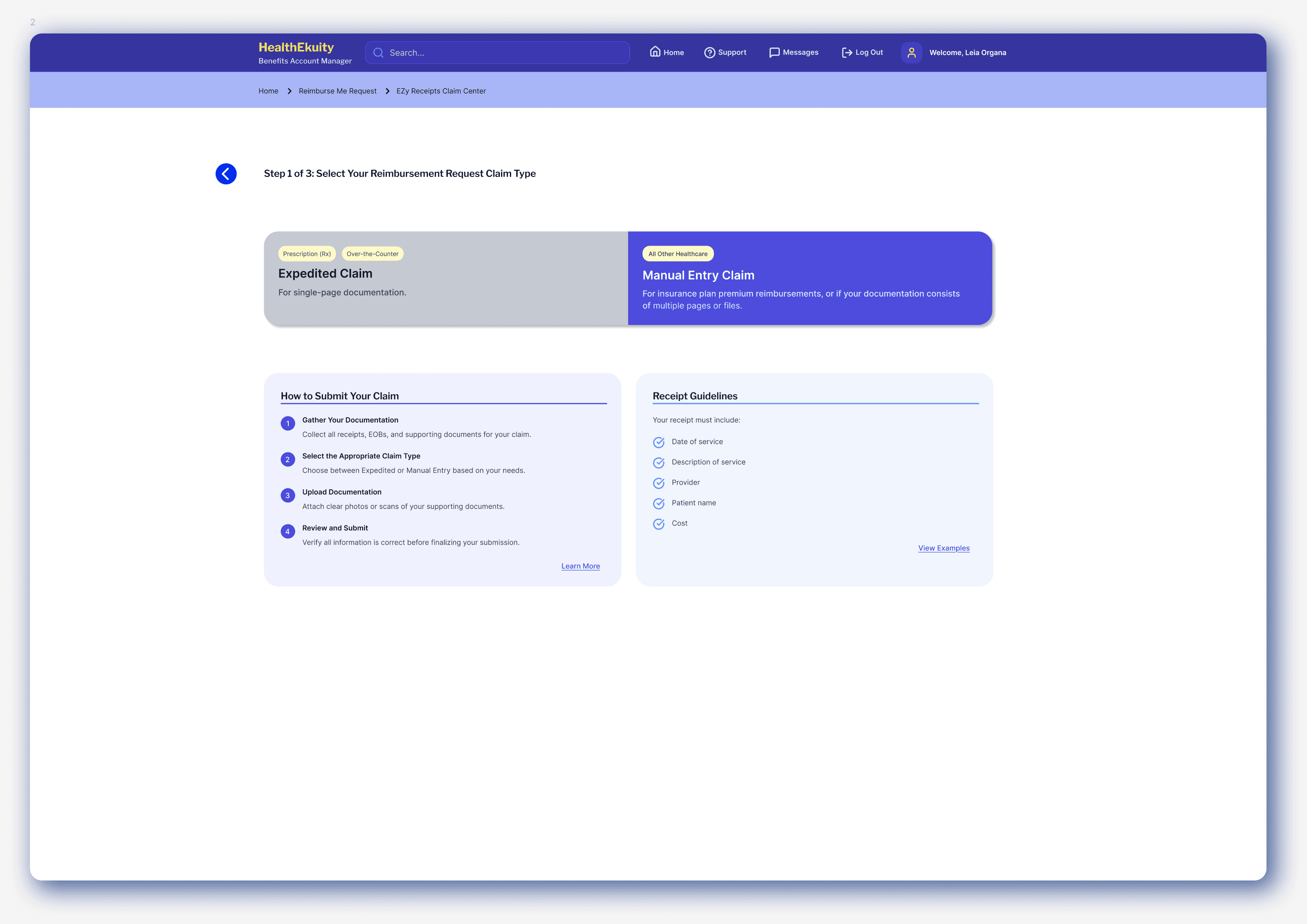
After
Impact
If implemented, this redesign could lead to:
30–40% fewer clicks during claim submission.
Reduced cognitive load with clearer flows and less manual input.
Higher adoption and satisfaction — less frustration means more engagement.
Reflection
This redesign was about untangling complexity in a space that directly affects users’ health and finances.
By merging steps, modernizing the UI, and putting the user’s needs at the center, I transformed a clunky legacy experience into one that feels intuitive, trustworthy, and human.