Metastate - Product Design | B2C | Biotech
Metastate
Translating biological complexity into product
My role
Product Designer (0 —>1)
Scope
UX/UI
Product Strategy
AI-assisted Research
UX writing
Specifications
Tools: Figma, ChatGPT, Perplexity, Notion
Project Summary
Context
Metastate is an early-stage biotech company building a consumer product that helps individuals understand how their genetics influence metabolism. The product analyzes raw DNA data (e.g., from services like 23andMe) and translates it into insights about how the body processes nutrients, energy, and key biochemical pathways.
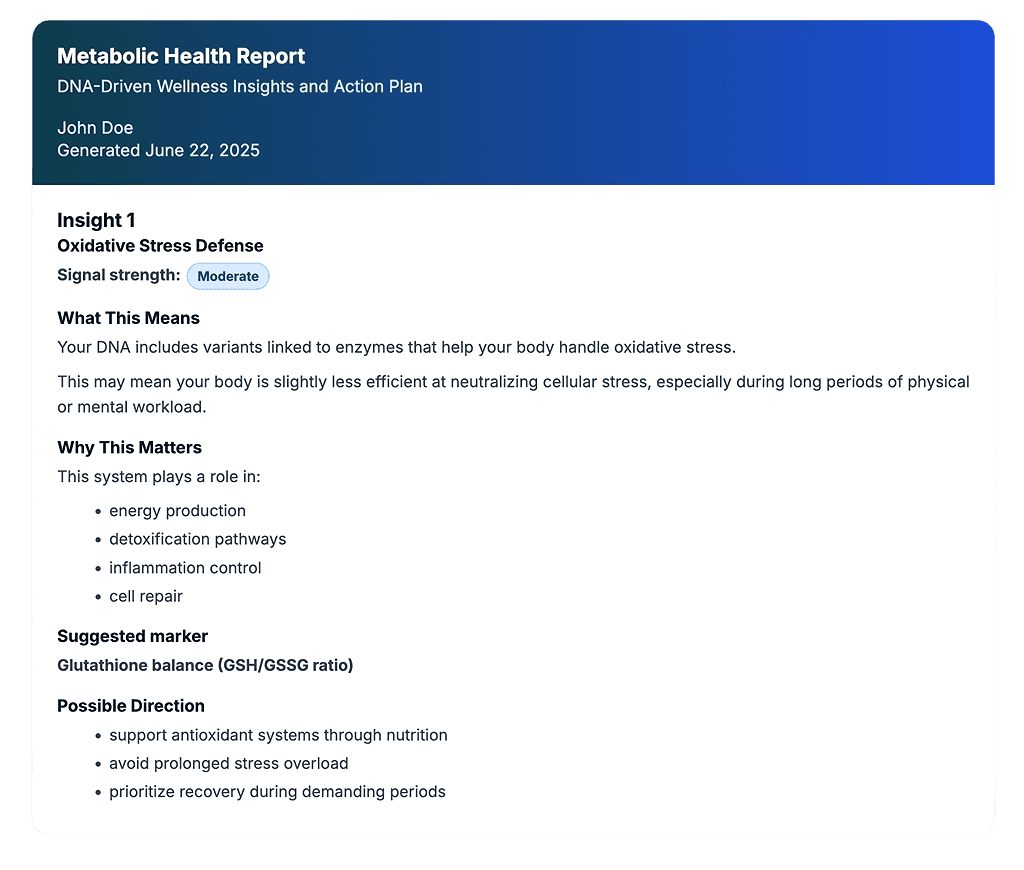
When I joined, my role was to bring Metastate’s new product to life—designing the landing page, report dashboards, and PDF report while translating complex science into a clear, usable experience.
How might we…
make metabolic science usable and package complex insights into a product users immediately understand—and trust enough to act on?
Challenge 1
Making science usable.
Existing DNA reports in the market were dense, technical, and difficult for non-experts to interpret. Metastate Bio needed a way to bridge that gap: turning complex metabolic and genetic data into a clear, intuitive, and actionable experience that users could both understand and trust.
Challenge 2
Strategic Pivot: From Signup Funnel → Direct Value Exchange
The initial landing page focused on explaining services and collecting early signups through discounts and waitlist incentives.
Approach
Working closely with the founder, I analyzed existing DNA reports and synthesized patterns in how genetic data is typically presented and misunderstood.
Through AI-assisted research and rapid iteration, I designed the MVP and landing page for Metastate’s new product focused on real-world effects and actionable outcomes.
In parallel, I restructured the product and landing experience around a clearly defined, purchasable outcome (a metabolic action report), aligning the design with both user understanding and business goals.
Solutions I Implemented
1. Simplified Biochemical Complexity
Translated dense scientific language into clear, outcome-driven insights so users can immediately understand and act.
“Upload your DNA file and receive a structured analysis of biological pathways your genetics may influence…” →
“Our DNA Metabolic Action Report helps you discover how your genes influence how your body processes nutrients and energy…”
“Metabolic Architecture Overview” →
“Metabolic Health Report”
2. Used AI as a Design Multiplier
Integrated AI into the workflow for faster iteration & deeper domain understanding to:
Synthesize biochemical research
Generate & refine UX copy
Stress-test clarity (“make this simpler”)
Explore multiple content directions rapidly
Research examples
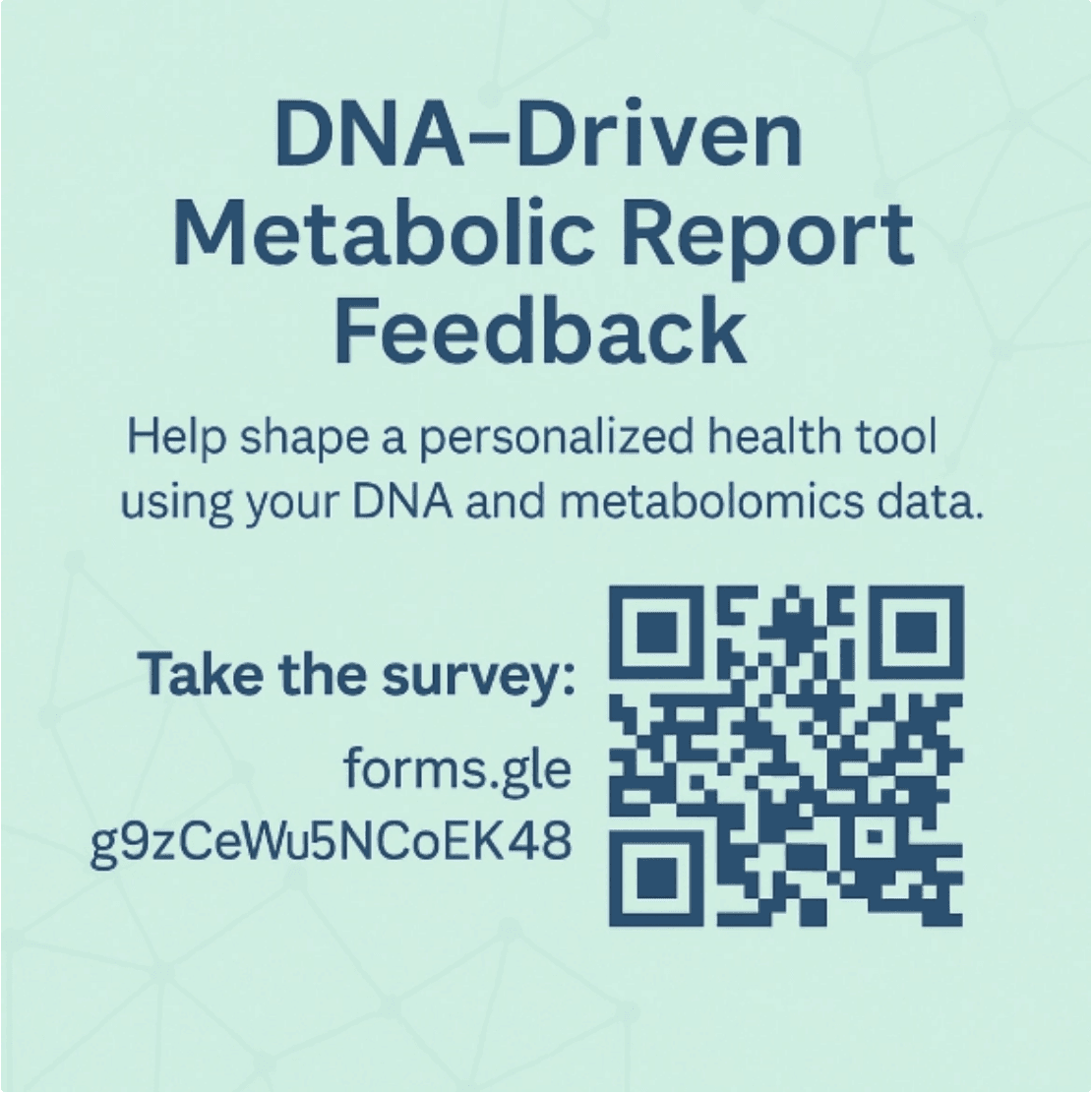
Social media postcard w/QR-code

3. Built a Conversion-Focused Narrative
Structured the landing page to progressively reduce doubt for a guided decision-making flow:
Clear value prop (hero)
Differentiation (why this is different)
How it works (low friction)
Benefits (translated to outcomes)
Trust (scientific credibility + guarantees)
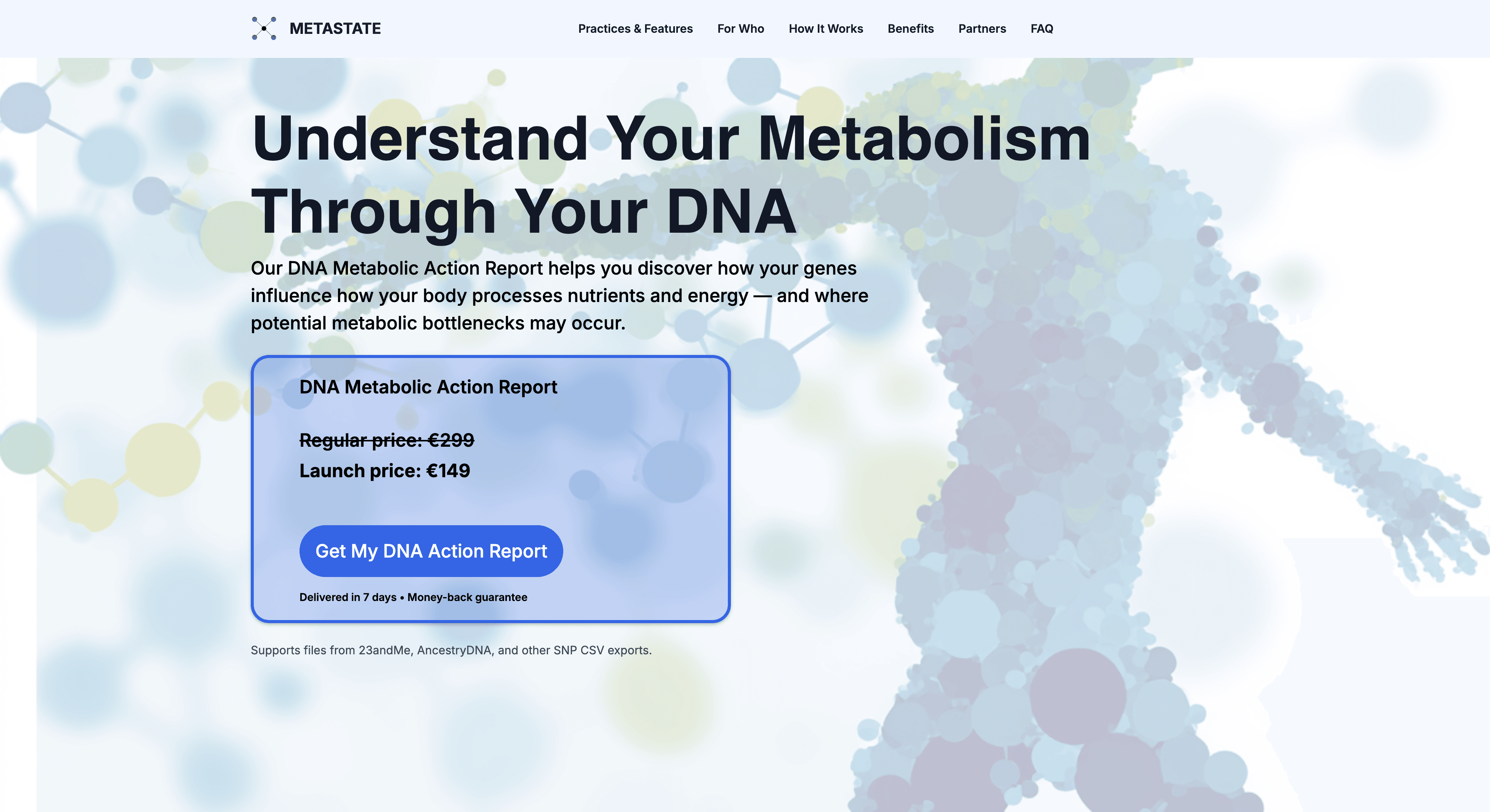
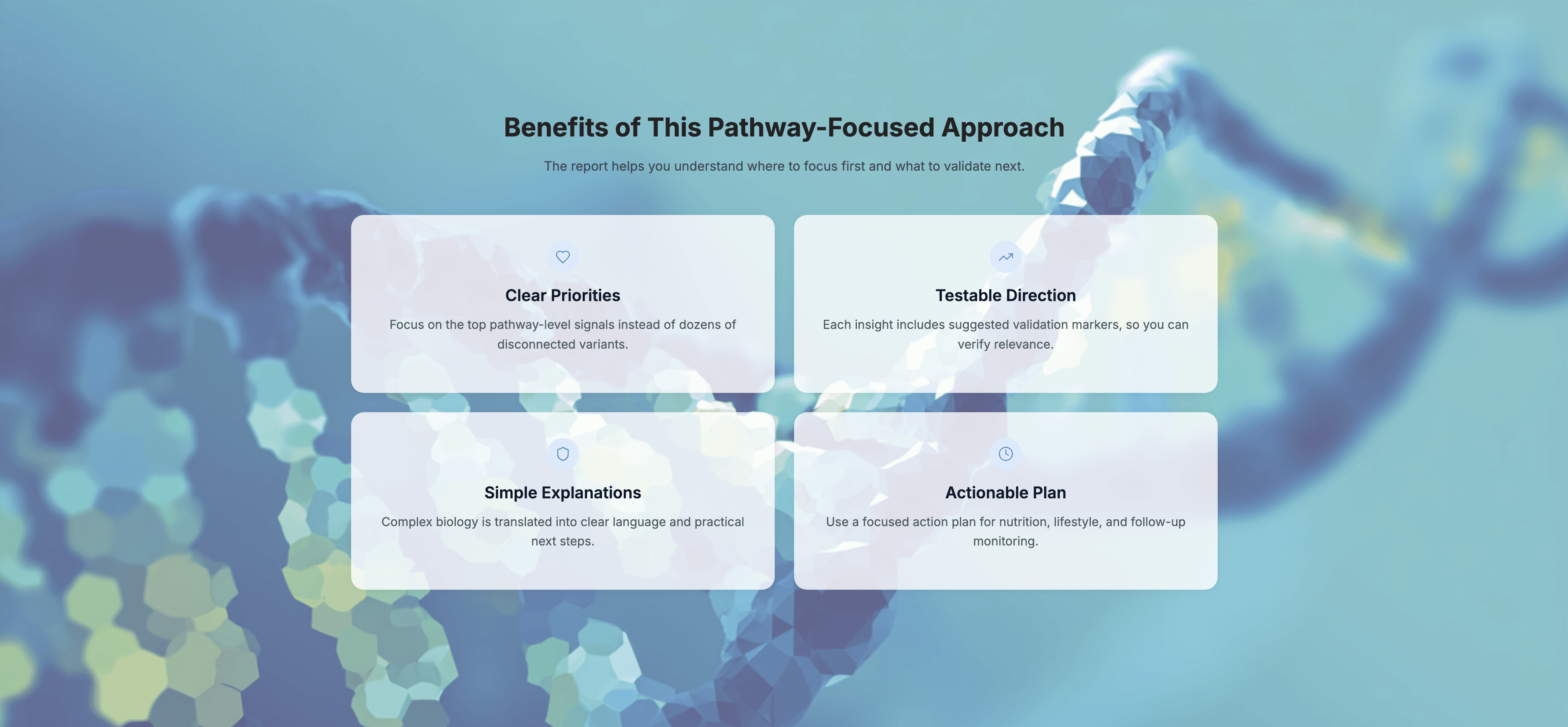
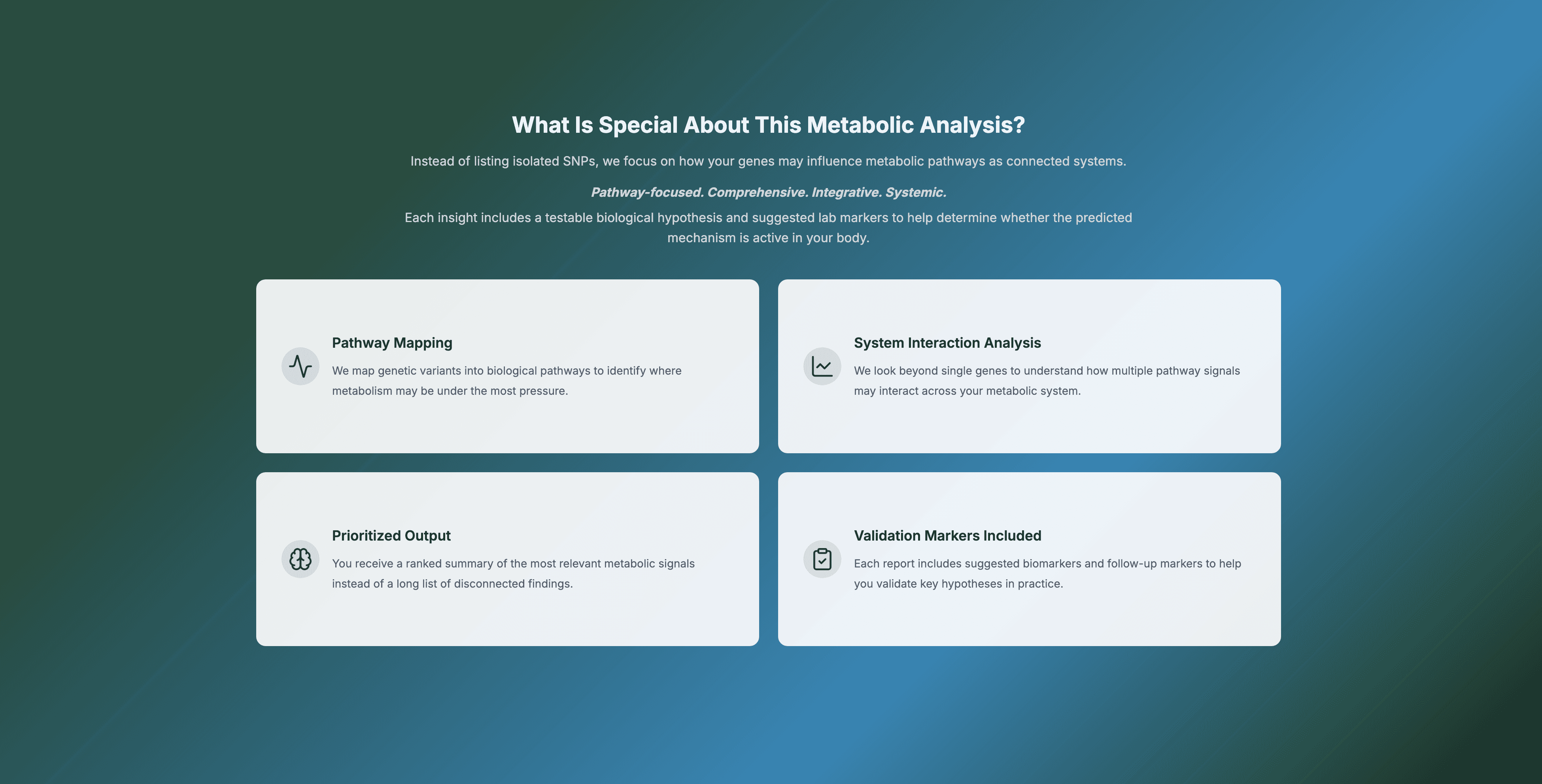
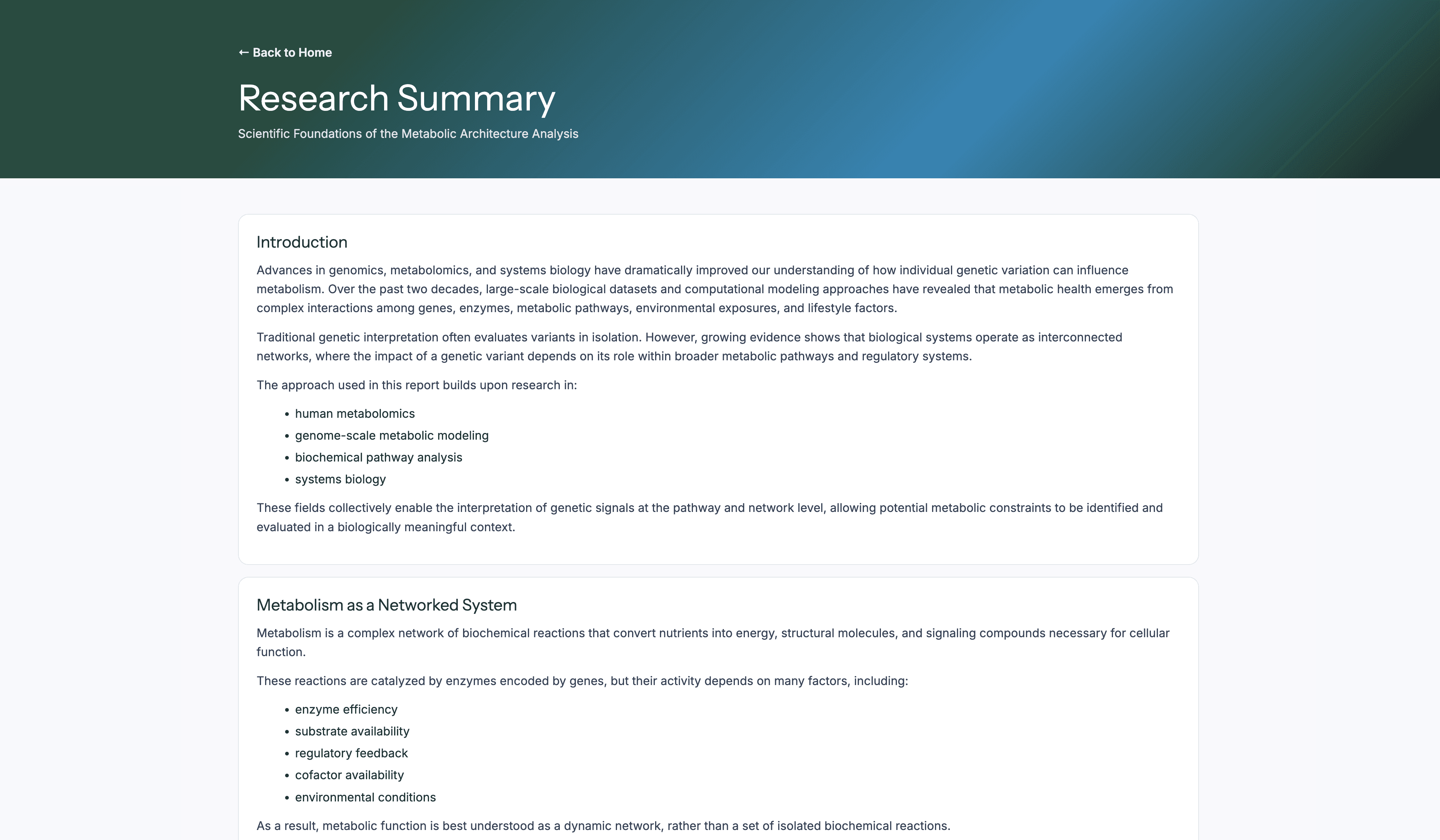

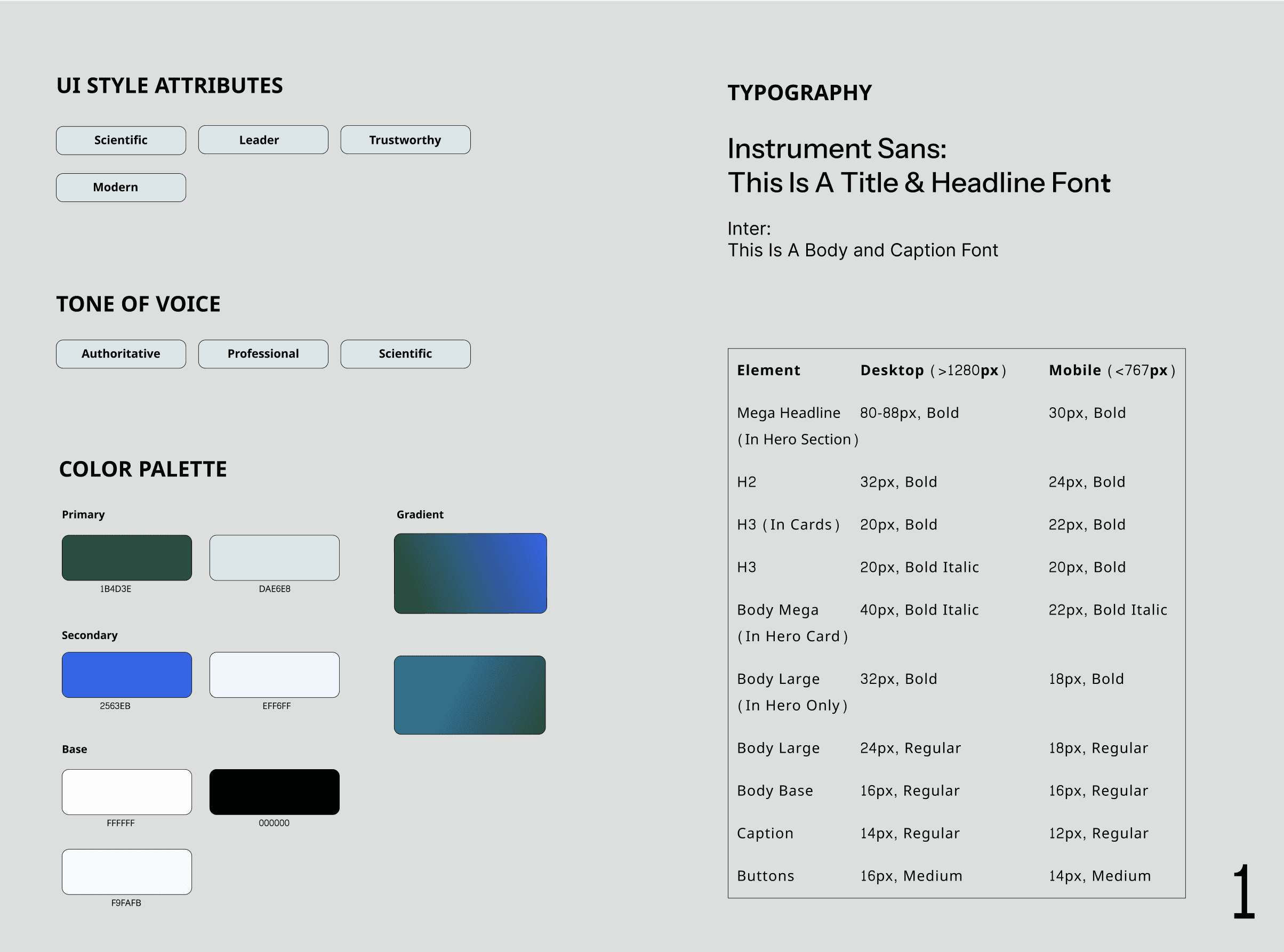
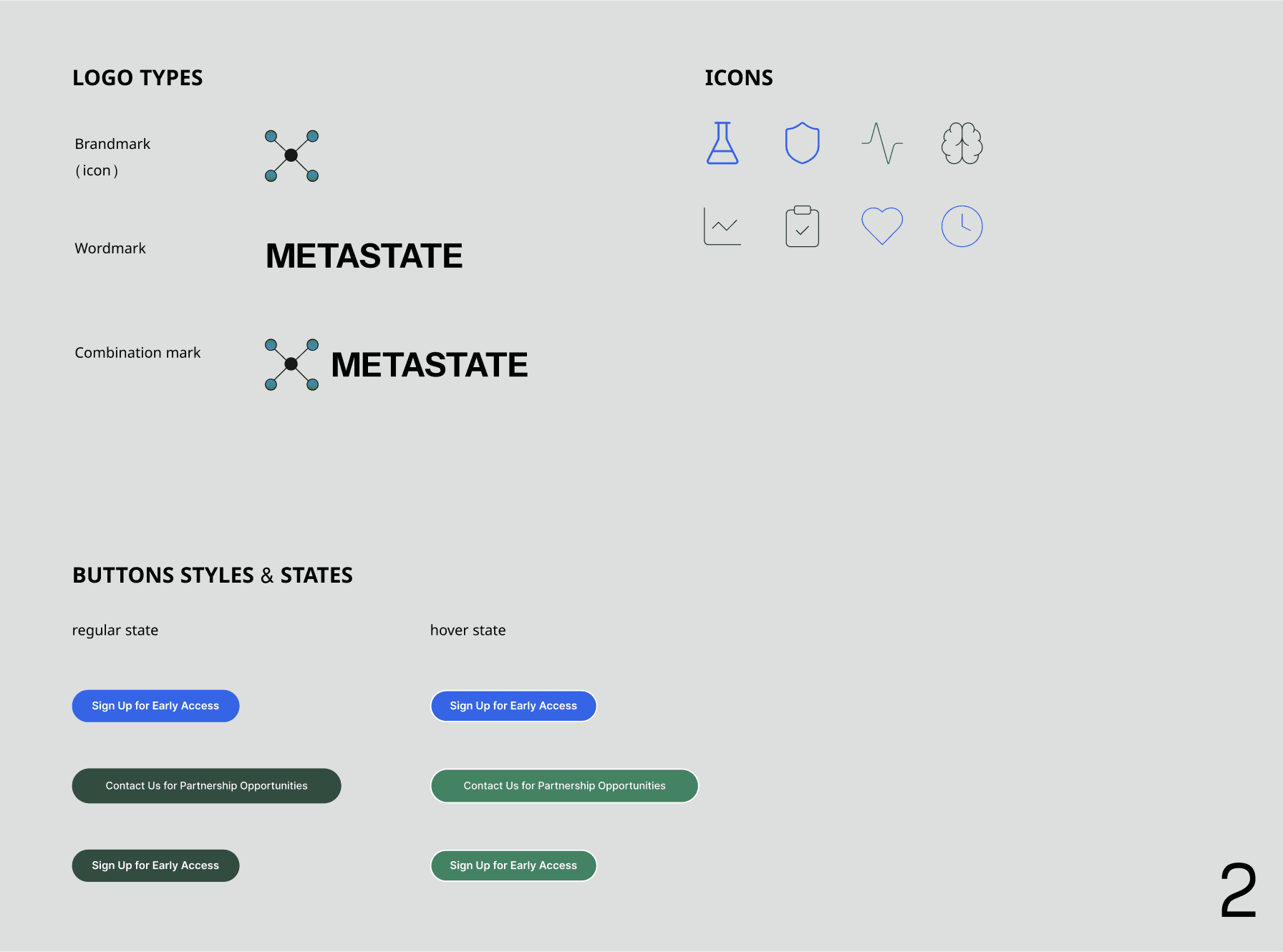
Strategic Pivot: From Signup Funnel → Direct Value Exchange
The initial landing page focused on explaining services and collecting early signups through discounts and waitlist incentives.
Why the Shift
From “maybe later” → to “I understand and I’m ready"
Users were being asked to sign up before fully understanding the value.
I reframed the experience around a clear, purchasable outcome—reducing friction and increasing decision clarity.
Before
Initial Direction: Signup Funnel
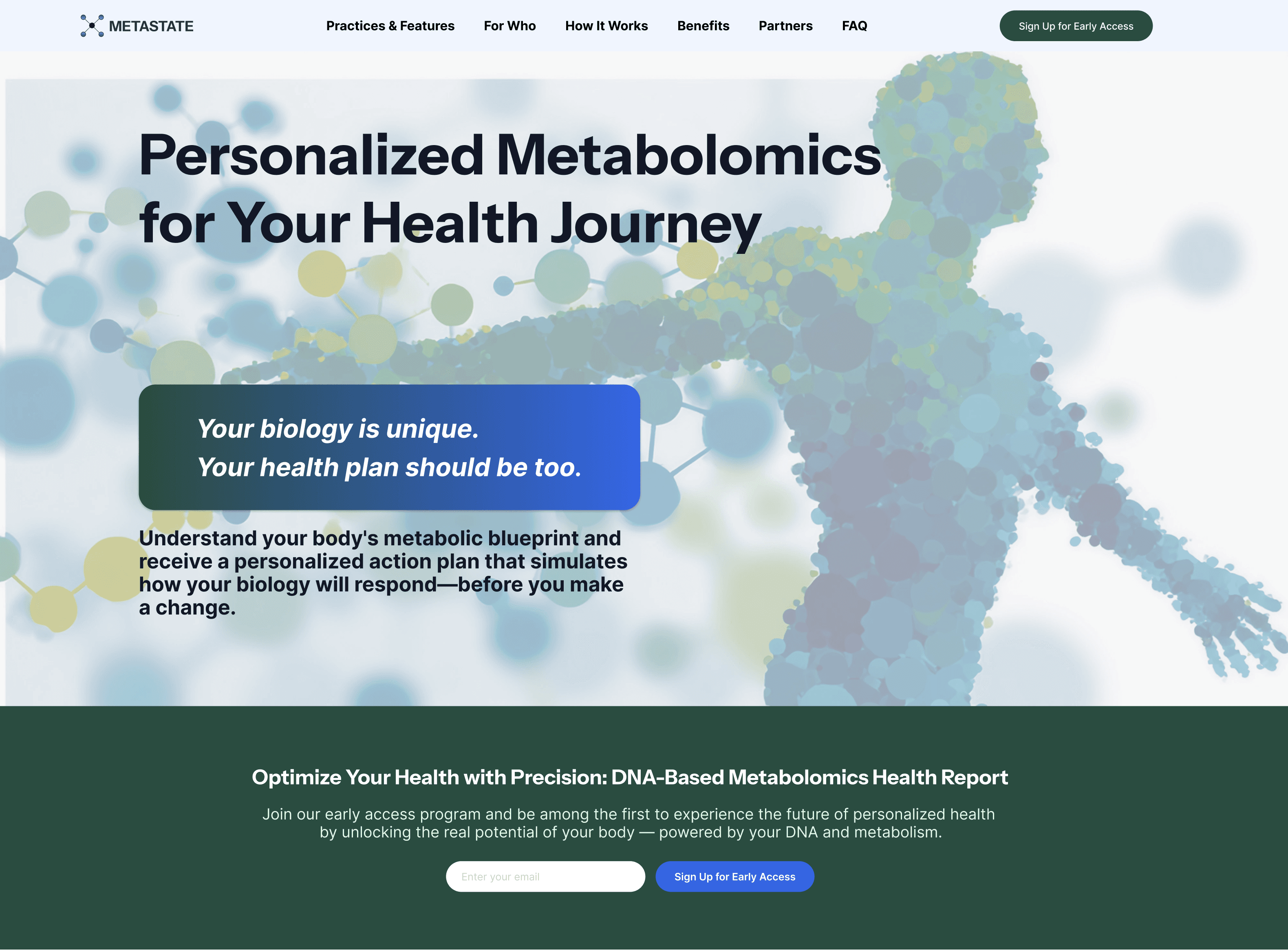
abstract value
delayed payoff
low intent, optimized for interest, not commitment
After
Final Direction: Product-led Conversion
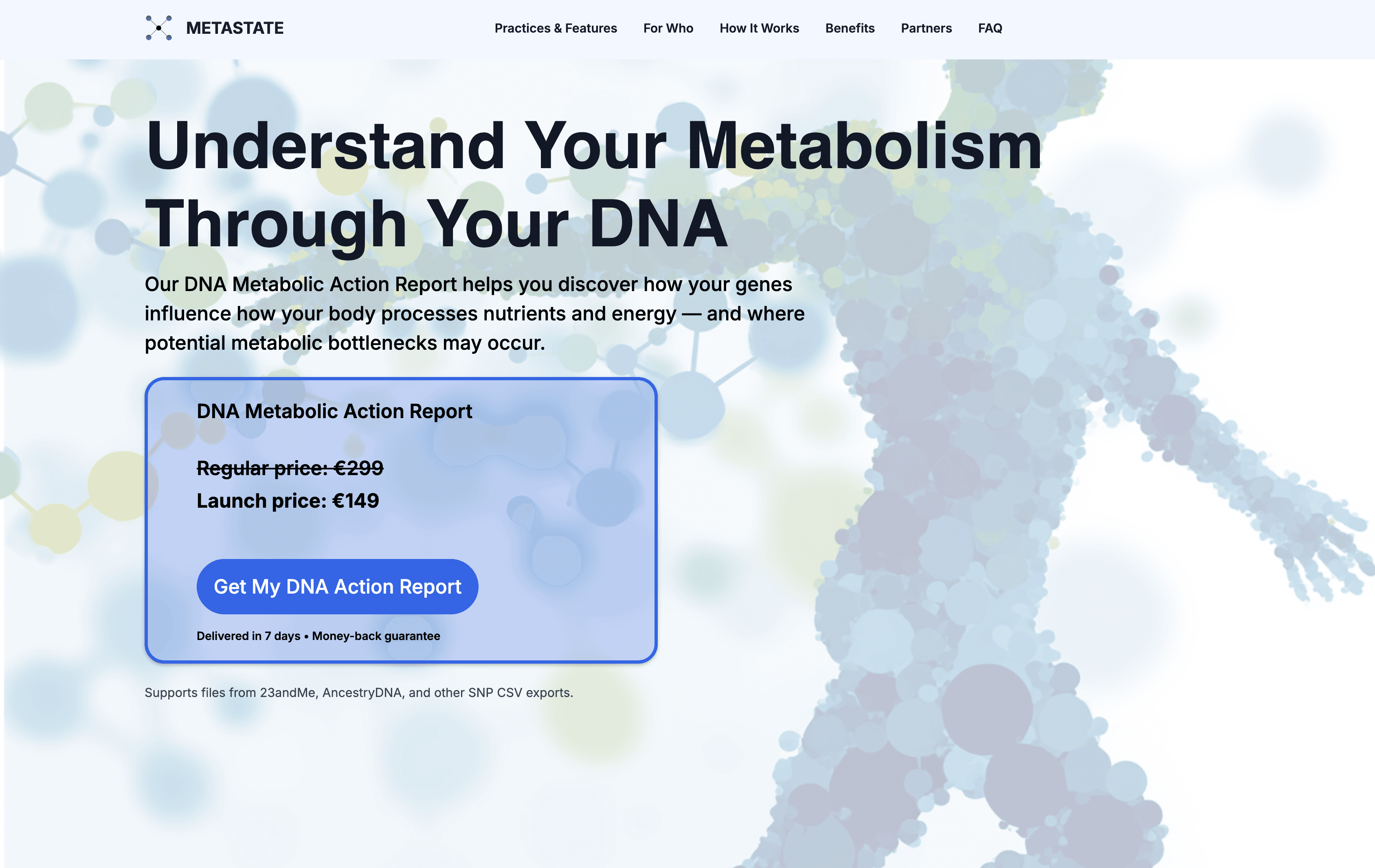
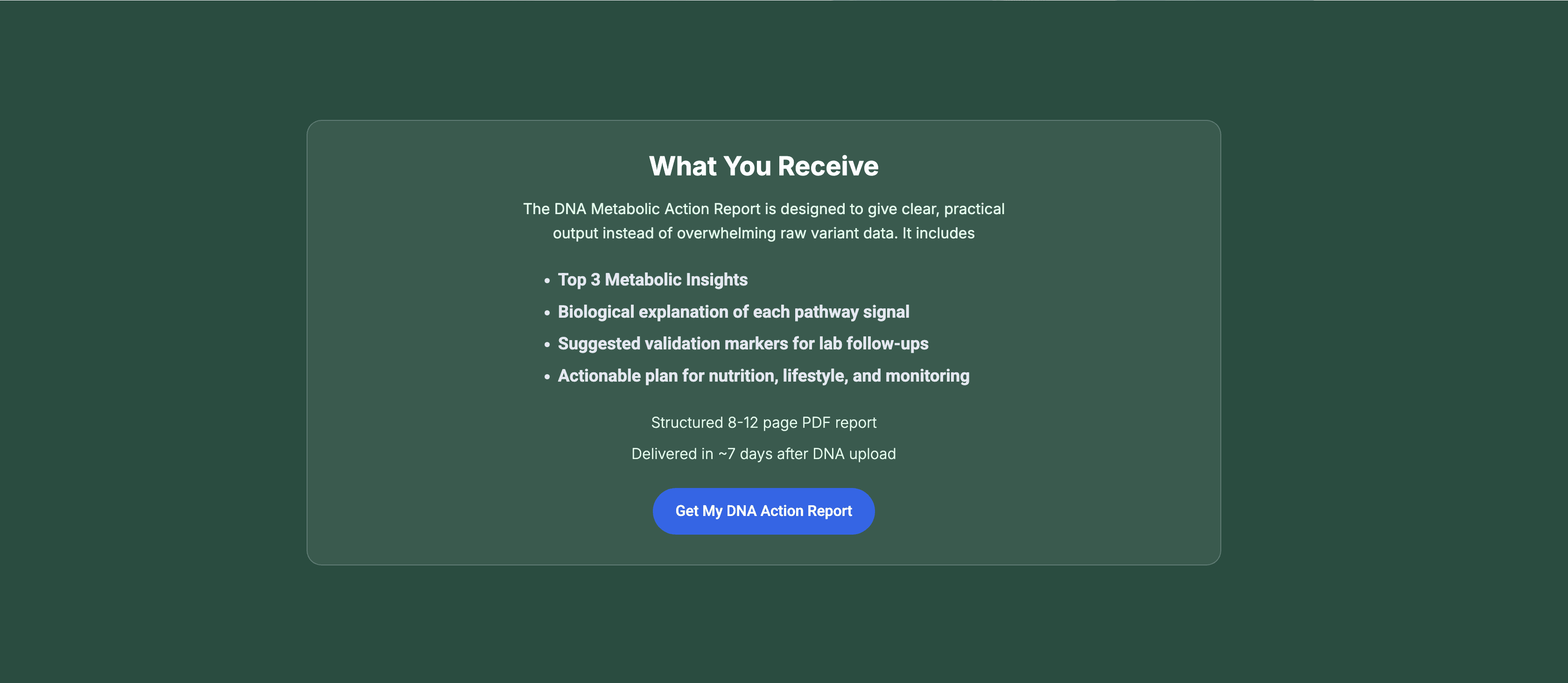
Clear product
Immediate understanding
high intent, designed for conversion
Impact
Turned complex metabolic science into a clear, user-friendly product
Reduced cognitive load across the experience
Positioned the product as actionable, not informational
Built a strong foundation for conversion and trust
Reflection
Language is the interface.
In complex domains, simplifying meaning—not just UI—is what drives understanding and action.
Trust Constraint. Especially in health-related products, clarity beats cleverness, specificity beats vagueness, structure beats volume.
What's Next
Personalization layer (dynamic insights preview)
A dashboard experience post-purchase
Interactive metabolic maps (visual system exploration)
Behavioral nudges tied to report outputs